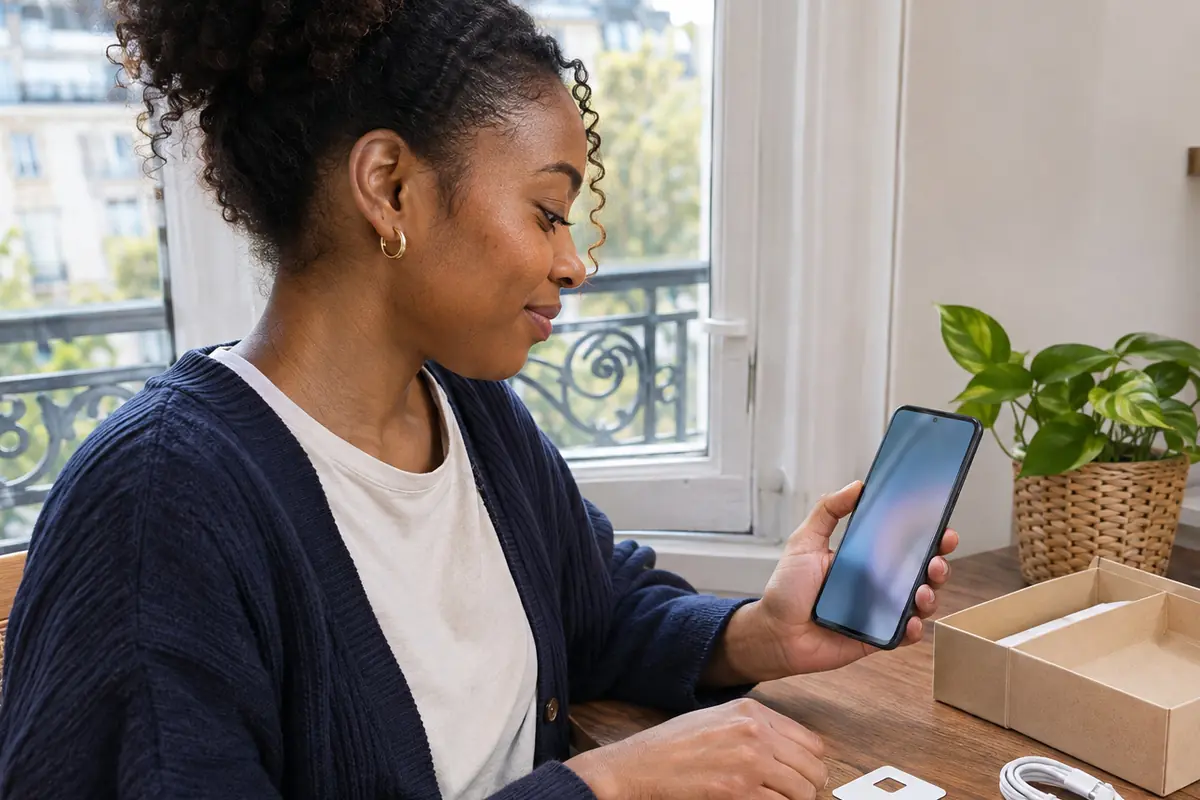
SIM free smartphone financing lets a buyer pay for an unlocked handset in instalments without signing a mobile network contract. The phone arrives with no operator lock, so any compatible SIM card can be inserted and the cheapest tariff chosen separately. Funding comes from a manufacturer plan, a retailer's credit partner, a bank loan or a buy-now-pay-later service, each with its own approval rules, repayment schedule and charges that should be compared carefully before ordering, since the cheapest monthly figure is not always the cheapest deal.
What SIM free means for a handset
A SIM free phone, also called unlocked, is sold without ties to a network. It works with any operator that uses compatible frequencies, and a different SIM card can be inserted at any time, whether at home or while travelling abroad.
Because no network subsidises the price, the handset is shown at its full retail cost. That figure can feel high on the shelf, which is the main reason many buyers look for ways to spread it over several months rather than settle everything at once.
Separating the phone from the service gives clearer pricing. Buyers see exactly what the device costs and what the airtime costs, so each can be shopped around independently, and a good tariff can be kept when a new handset is bought later.
Unlocked models are available from every major maker, from entry-level devices to flagships. Choosing a model that matches real needs, such as battery life, camera quality or storage, keeps the amount to finance sensible and the monthly commitment light.
Routes for SIM free smartphone financing
Several providers offer instalments for unlocked devices. Handset makers sell directly through their own stores with payment plans, while large electronics retailers work with finance partners that approve customers online in minutes.
Banks and credit unions provide personal loans that can be used with any seller, which suits buyers who find a good price at a smaller shop or during an online promotion. Buy-now-pay-later services split the cost into a handful of payments, often with no interest if every payment is made on time.
Some network operators also sell unlocked phones on a payment plan while keeping the service separate. Checking whether the plan truly stands alone, with no obligation to take a tariff, is a sensible first question.
Instalment terms on unlocked devices commonly run from a few months to around two or three years, with shorter plans mostly interest free and longer ones more likely to carry a rate. The right length depends on how long the handset is expected to last.
Comparing a SIM free purchase with a contract phone
A contract phone bundles handset and service into one monthly bill. This is convenient, but the buyer may pay for a tariff that no longer matches their needs, and the handset price stays hidden inside the total.
With a SIM free handset and a separate low-cost SIM-only plan, the same monthly spend frequently covers more data or a shorter commitment. Calculating both options over the same period, including the cost of the phone, shows which arrangement is cheaper.
The trade-off is discipline. Two separate agreements mean two payment dates and two sets of terms, and a buyer who dislikes that complexity may prefer the single bill of a bundle even at a slightly higher price.
Costs, fees and the price of the handset
The total repayable depends on the financing route. A zero-interest plan costs no more than the shelf price, whereas a loan adds interest and sometimes an arrangement fee, and a lease can end up well above the price of the phone.
The advertised price of an unlocked device also varies between shops. Manufacturers' own stores, supermarkets, specialist chains and online marketplaces may differ noticeably, so a few minutes of comparison before applying for credit can lower the amount that needs to be financed.
Hidden costs include delivery charges, a deposit, insurance sold at checkout and fees for late payment. Asking for a written breakdown before confirming the order ensures that every element of the price is visible.
Eligibility and approval for unlocked handsets
Providers normally ask for proof of age, a valid identity document, an address, a bank card or account and sometimes proof of income. The strength of the credit record decides the limit offered and the terms available.
Because an unlocked phone is easy to resell, some lenders are stricter on high-value models. A smaller limit or a requirement for a deposit is not unusual, and a more modest handset may be easier to finance than a top-of-the-range model.
If an application is refused, the provider should be able to explain the general reason. Reviewing the credit report for mistakes, and waiting before reapplying, is wiser than submitting forms elsewhere in rapid succession.
Self-employed applicants and people paid irregularly can usually apply, though they may be asked for bank statements or tax documents. Presenting these promptly shortens the process and reduces the chance of a request for further information.
Checking compatibility before you buy
An unlocked handset is only useful if it supports the local networks. Frequency bands, 5G capability and features such as eSIM or dual-SIM vary from model to model and between regional versions, so reviewing the specification sheet is essential.
Phones imported from another region may lack certain bands or voice features, and warranty coverage may not apply outside the country of sale. Buying from a local seller or an authorised dealer reduces the risk of surprises.
Checking that the device is not blacklisted or tied to a previous owner's account matters particularly with second-hand stock. A reputable seller gives the serial number and confirms that the handset is free of locks and outstanding finance.
A quick check of the local operator's website normally lists the supported bands, while a short chat with the seller before payment can confirm that the model is the regional version intended for the buyer's country.
Warranty, returns and protection
Consumer law in many countries gives buyers rights if a handset is faulty, regardless of whether it was paid for in cash or on credit. Keeping the invoice and the credit agreement together makes it easy to prove the purchase and its terms.
Distance sales usually come with a short period in which the order may be cancelled and the item returned. If the purchase was financed, the cancellation normally ends the credit agreement as well, but the process should be confirmed in writing.
Insurance for loss, theft and accidental damage is available from manufacturers, retailers and independent insurers. Prices and excesses differ, and a household policy may already include coverage for portable electronics at a lower cost.
Protecting yourself when choosing SIM free smartphone financing
A cautious buyer reads the whole agreement, notes the total repayable, the number of instalments and the date of the first payment, and checks whether early settlement is free. Anything unclear should be queried before the order is confirmed.
Scams exist around unlocked phones, from fake shops with unbelievably low prices to requests for advance fees. Checking the seller's reputation, contact details and payment security protects both money and personal data.
Setting up automatic payments, keeping a reserve for the month when income dips and contacting the lender early if problems arise help keep the plan under control. Paying off a handset on schedule leaves the buyer with a phone that can be used on any network.